When Tata Motors introduced the original Punch in 2021, few expected it would become India's best-selling car by 2024, ending Maruti Suzuki's four-decade reign. Today, the Tata Punch returns with its first major update, combining bolder styling, enhanced features, and a powerful new turbo engine that promises to redefine expectations in the micro SUV segment.
The launch happened just hours ago on January 13, 2026, and the updates are substantial enough to make both existing owners and potential buyers take notice. Whether you're a first-time car buyer, a city commuter, or someone seeking a safe family vehicle, this comprehensive guide covers everything about the refreshed Punch.

Tata Punch Facelift: What Makes It Special?
The updates go far beyond cosmetic changes. Tata has addressed feedback from thousands of owners while keeping the core strengths intact. The facelift brings a complete visual transformation inspired by the Punch EV, introduces advanced safety features as standard equipment, and adds a turbo-petrol option that earlier buyers could only dream about.
More importantly, the company has maintained competitive pricing despite adding significant value. This strategic move ensures the Punch remains accessible to middle-class families while offering premium features that were once reserved for expensive SUVs.
Tata Punch Facelift 2026 Price: Breaking Down the Numbers
Tata Motors announced pricing that starts at ₹5.59 lakh for the base Smart variant and extends to ₹9.29 lakh for the top-spec Accomplished Plus S CNG variant. These are ex-showroom prices, meaning the final cost varies based on your location.
The petrol manual lineup spans six variants: Smart at ₹5.59 lakh, Pure at ₹6.49 lakh, Pure Plus at ₹6.99 lakh, Adventure at ₹7.59 lakh, Accomplished at ₹8.29 lakh, and Accomplished Plus S at ₹8.99 lakh. The CNG range mirrors this structure with slightly higher pricing, starting from ₹6.69 lakh and topping out at ₹9.29 lakh.
What about the turbo-petrol? While exact variant-wise pricing wasn't immediately disclosed, the turbo option will command a premium over naturally aspirated versions, likely positioning itself as a mid-to-high variant offering.
Tata Punch On Road Price: The Real Cost of Ownership
Ex-showroom prices tell only part of the story. The Tata Punch on road price includes registration charges, insurance premiums, and state-specific taxes that add approximately ₹70,000 to ₹1 lakh to the base figure.
In Delhi, expect on-road pricing to range from ₹6.7 lakh for the entry variant to around ₹10.5 lakh for top CNG versions. Metro cities like Mumbai and Bangalore typically see similar or slightly higher figures due to local taxation. Tier-2 cities often offer marginally better deals.
Dealerships across India have begun sharing location-specific on-road estimates, and early reports suggest strong demand particularly for mid-variants that balance features and affordability. EMI options start around ₹13,000 per month for the base variant with standard loan terms.
New Tata Punch 2026: Design That Commands Attention
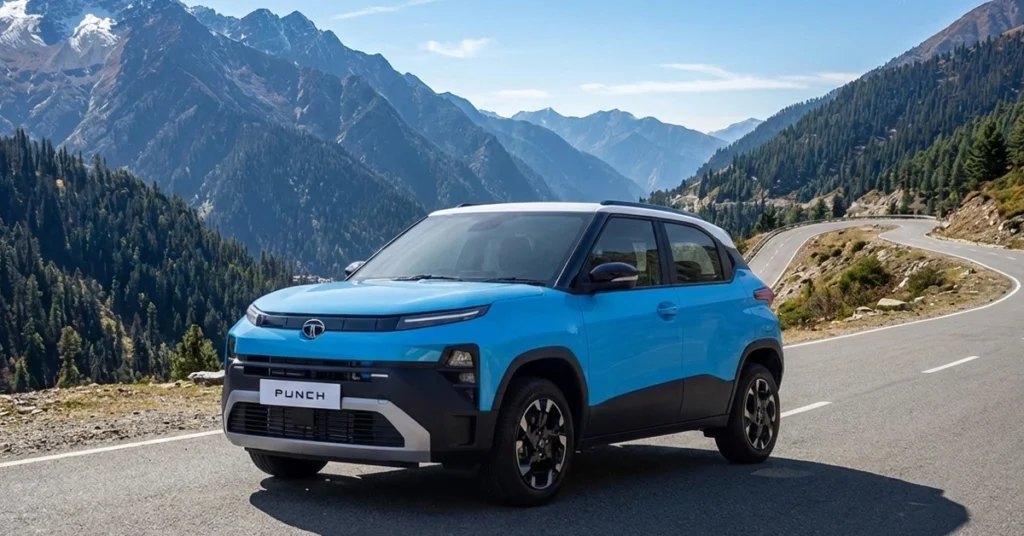
The exterior transformation immediately catches your eye. Up front, the SUV features slimmer LED daytime running lamps flanking a redesigned 3D grille, creating a more sophisticated look. The headlamps have moved to vertical housings within the bumper, a bold design choice borrowed from the Punch EV that adds character without sacrificing the rugged appeal.
The front bumper now incorporates heavier black cladding, a silver skid plate element, and vertical air flaps on the outer edges for improved aerodynamics. These aren't just styling gimmicks—they serve functional purposes while making the Punch look tougher and more planted on the road.
Move to the side profile, and you'll notice the changes are subtler but meaningful. New 16-inch diamond-cut alloy wheels replace the previous design, lending a more premium stance. The thick wheel arch cladding, roof rails, and pillar-integrated rear door handles remain, maintaining the SUV's distinctive silhouette. At 3,827mm long with a 2,445mm wheelbase, the dimensions stay familiar, but the vehicle now sits 49mm longer than before.
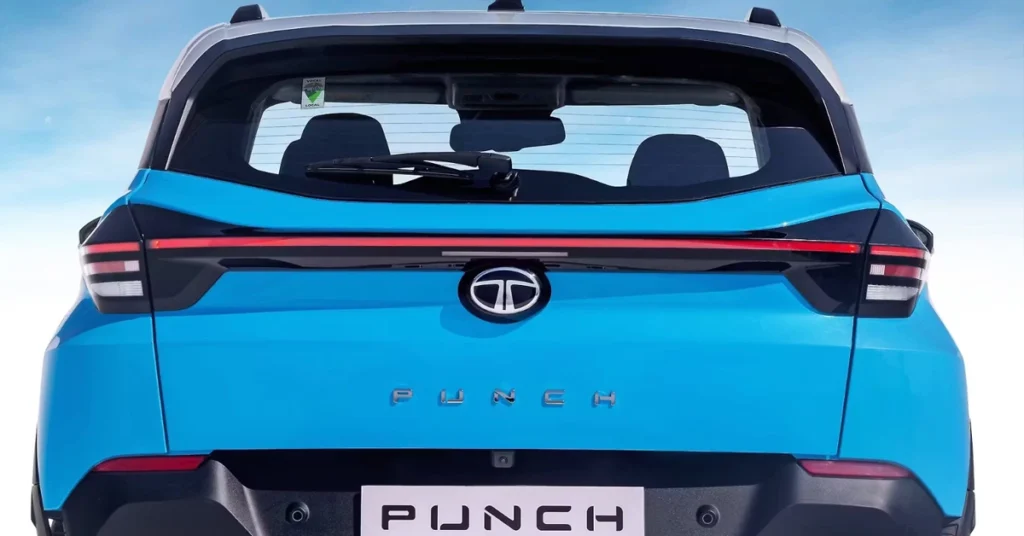
The rear transformation might be the most dramatic. Connected LED tail lamps stretch across the tailgate, joined by a full-width LED strip housed in new black trim. This modern touch aligns with current automotive trends while making the Punch instantly recognizable at night. The rear bumper has been completely redesigned with a prominent faux silver skid plate, and the camera module has relocated to sit above the license plate.
Tata offers six color options: Pristine White, Bengal Rouge, Daytona Grey, Coorg Clouds, Cyantific Blue, and Caramel. These aren't random choices—they're carefully selected shades that appeal to diverse buyer preferences, from conservative whites and grays to eye-catching blues and reds.
Tata Punch Facelift Features: Technology That Matters
Step inside, and the cabin feels noticeably more upscale than the outgoing model. The dashboard layout borrows heavily from the Punch EV, featuring a new two-spoke steering wheel with an illuminated Tata logo that adds a premium touch. The dual-tone charcoal and blue color scheme with white inserts creates visual depth, breaking up what could otherwise feel like a monotonous dark interior.
The 10.25-inch touchscreen infotainment system has been updated with slimmer bezels and improved processing power, making it more responsive and intuitive. It supports wireless Android Auto and Apple CarPlay, eliminating the need for cables during daily commutes. The screen quality appears sharper, and early reviews suggest the interface responds noticeably quicker than previous versions.
A new 7-inch digital instrument cluster sits between traditional analog gauges, displaying trip information, fuel economy, and navigation prompts clearly. This part-digital setup strikes a balance between modern tech and familiar readability, particularly useful for older drivers who might find fully digital clusters overwhelming.
The climate control system switches to a touch-based interface with physical toggles, a design that looks modern but retains tactile feedback. Automatic climate control in higher variants means you set your preferred temperature once and forget about it. Rear AC vents ensure back-seat passengers stay comfortable during long drives or summer trips.
Other noteworthy features include a voice-assisted electric sunroof (on select variants), wireless charging pad, cruise control, auto-dimming inside rearview mirror, and iRA connected car technology that lets you remotely monitor vehicle status, track location, and even start the air conditioning before entering the car.
The 360-degree camera system deserves special mention. It provides multiple viewing angles and includes blind-spot monitoring displayed directly on the infotainment screen. For urban drivers navigating tight parking spots or narrow lanes, this feature alone could justify choosing a higher variant.
Seats now offer extended thigh support, addressing a common complaint about the original model. The front armrest and height-adjustable driver seat improve comfort during long drives. Rear passengers get a center armrest and improved legroom despite the unchanged wheelbase.

Boot space measures 366 liters for petrol variants, enough for weekend getaway luggage or grocery runs. CNG versions sacrifice some trunk room at 210 liters due to the twin-cylinder setup, but they remain practical for daily use.
Tata Motors Preparing to Launch Updated Punch Micro SUV: The Performance Story
The biggest news mechanically is the introduction of a 1.2-liter turbo-petrol engine producing 120 horsepower and 170 Newton-meters of torque, paired exclusively with a six-speed manual transmission. This represents a substantial upgrade over the naturally aspirated engine, offering the kind of punch (pun intended) that makes highway overtaking and steep hill climbs noticeably easier.
Tata claims the turbo variant accelerates from 0-100 km/h in 11.1 seconds, which sounds modest on paper but feels brisk in real-world driving given the vehicle's light weight. The power-to-weight ratio of 105 PS per tonne means the SUV doesn't feel underpowered even with four adults aboard.
For buyers prioritizing fuel economy over outright performance, the 1.2-liter naturally aspirated petrol engine remains available. It develops 88 horsepower and 115 Nm, paired with either a five-speed manual or five-speed AMT (automated manual transmission). The NA engine delivers respectable performance for city commuting while returning better fuel economy than the turbo.
The CNG option produces 74 horsepower and 103 Nm, and here's where things get interesting—Tata now offers a five-speed AMT with the CNG powertrain, a segment-first feature that eliminates manual gear changes while running on compressed natural gas. For commercial vehicle owners or high-mileage drivers, this combination of low running costs and automatic convenience is game-changing.
Ground clearance stands at 193mm (some sources mention 187mm), high enough to confidently tackle speed breakers, potholed roads, and light off-road trails. The suspension setup prioritizes comfort over sporty handling, which suits the target audience perfectly. City roads feel smooth, and highway cruising at 100-120 km/h remains stable with minimal wind noise.
Two driving modes—Eco and City—let you optimize power delivery based on conditions. Eco mode prioritizes fuel efficiency during highway cruising, while City mode offers better throttle response for urban driving with frequent acceleration and braking.
Tata Punch 2026: Safety Features That Save Lives
Perhaps the most significant update is the inclusion of six airbags as standard across all variants. This decision puts passenger safety above cost-cutting, ensuring even base variant buyers get comprehensive protection. Combined with the Punch's 5-star Global NCAP safety rating (from the original model), this makes it one of the safest choices in the segment.
Electronic Stability Control (ESC) now comes standard, helping prevent skids during emergency maneuvers or slippery conditions. Hill Hold Assist prevents rollback when starting on inclines, useful in hilly areas or multi-level parking structures. Hill Descent Control maintains steady speed when driving down steep slopes without constant brake application.
The Tire Pressure Monitoring System (TPMS) alerts you to under-inflated tires before they cause fuel economy drops or blowouts. Parking sensors and a reverse camera make tight parking spots manageable, while higher variants add the aforementioned 360-degree camera for complete awareness.
ABS with EBD (Electronic Brake-force Distribution), traction control, and ISOFIX child seat anchors complete the safety package. Tata hasn't compromised here, and that matters tremendously for families with young children or safety-conscious buyers.
Tata Punch Facelift 2026: Variant Breakdown and What You Get
The variant lineup has been simplified to six trims, making the decision easier for buyers:
Smart (Base Variant): Gets you six airbags, LED headlamps, ESP, remote keyless entry, TPMS, and drive modes. It's surprisingly well-equipped for an entry variant, though it misses out on the touchscreen and alloy wheels.
Pure: Adds rear AC vents, steering-mounted controls, rear defogger, and day-night IRVM. These conveniences improve everyday usability without drastically increasing cost.
Pure Plus: This is where features start getting interesting. You receive an 8-inch touchscreen, reverse parking camera, wireless smartphone connectivity, cruise control, Type-C fast charging, and a height-adjustable driver seat.
Adventure: Steps up to 16-inch alloys, 10.25-inch touchscreen, LED DRLs, LED tail lights, extended thigh support seats, and automatic climate control. For many buyers, this represents the sweet spot between features and affordability.
Accomplished: Brings in the voice-assisted electric sunroof, 7-inch digital instrument cluster, wireless charging pad, auto-dimming IRVM, and iRA connected car tech.
Accomplished Plus S: The flagship adds 360-degree camera, blind-spot monitoring, and premium upholstery. This variant leaves nothing on the table for buyers wanting maximum features.
CNG variants follow similar naming but skip the turbo-petrol option. The availability of AMT with CNG in higher variants gives commercial users and taxi operators a compelling reason to choose Punch over rivals.
Why the Tata Punch Facelift 2026 Matters
Tata Motors didn't just update a successful product—they've addressed specific gaps that kept some buyers away. The turbo engine solves highway performance concerns. The improved feature list matches or exceeds competitors. The design refresh keeps the SUV feeling contemporary without alienating existing owners.
Pricing remains competitive against rivals like Hyundai Exter, Citroen C3, Nissan Magnite, Renault Kiger, and Maruti Fronx. Yet the Punch offers something none of these fully match: a combination of proven safety credentials, comprehensive warranty coverage, wide service network, and now, genuinely desirable styling and features.
The decision to make six airbags standard deserves repeated praise. Many competitors still charge extra for this life-saving feature or restrict it to top variants. Tata's approach shows they're prioritizing customer safety over profit margins, building long-term brand trust.
For first-time car buyers, the Punch removes many traditional compromises. You don't sacrifice safety for affordability, you don't choose between features and fuel economy, and you don't need to stretch your budget to get a vehicle that feels premium.
Who Should Buy the Tata Punch Facelift?
Urban families seeking a safe, practical, and stylish vehicle will find the Punch checks every box. The high seating position improves visibility in traffic, and compact dimensions make parking in crowded areas stress-free. Young professionals wanting their first car can start with a well-equipped base variant and still feel satisfied.
Commercial users, particularly those in taxi or delivery services, should seriously consider CNG variants with AMT. The running cost savings over time are substantial, and the automatic transmission reduces driver fatigue during long shifts.
Buyers upgrading from older hatchbacks will appreciate the SUV stance and improved features without facing sticker shock. The Punch offers "big car" presence at "small car" prices, a rare combination in today's market.
Those prioritizing safety above all else can buy confidently knowing the Punch earned its 5-star NCAP rating through genuine structural integrity, not clever marketing. For parents driving children to school or elderly passengers requiring secure transportation, this peace of mind matters immensely.
What to Consider Before Buying
While the facelift addresses many concerns, certain aspects require realistic expectations. The turbo engine, impressive as it is, won't match the refinement of more expensive vehicles. There's noticeable turbo lag at low RPMs, and the manual gearbox demands more involvement than dual-clutch automatics found in premium cars.
The AMT transmission, though convenient, exhibits the typical AMT traits—occasional jerkiness during shifts and slower responses compared to conventional automatics. For smooth highway cruising it's fine, but enthusiastic drivers might find it frustrating.
Rear seat space, while adequate for average-height adults, won't wow tall passengers. The upright seating helps, but legroom and headroom aren't as generous as larger SUVs. Long-distance comfort is acceptable but not exceptional.
Tata's service network, though extensive, sometimes faces parts availability issues in smaller towns. Resale value, while improving, still trails Maruti and Hyundai products. These aren't deal-breakers but deserve consideration based on your specific situation.
How the Punch Facelift Stacks Against Rivals
The Hyundai Exter offers similar features with arguably better fit-and-finish, but it lacks the Punch's safety credentials and costs slightly more for equivalent variants. The Citroen C3 feels more spacious inside yet misses basic features like touchscreen in lower variants and has a less extensive service network.
Nissan Magnite and Renault Kiger twins provide turbo power and style but can't match the Punch's build quality perception or safety rating. Maruti Fronx plays in a slightly different space, offering crossover styling but at notably higher prices without commensurate feature additions.
When you factor in total ownership costs—purchase price, fuel economy, insurance, maintenance, and resale value—the Punch emerges as a sensible choice for practical-minded buyers. It might not win every individual comparison point, but the overall package delivers exceptional value.
The Verdict: Is the Tata Punch Facelift 2026 Worth It?
For buyers shopping in the ₹6-10 lakh bracket who prioritize safety, features, and brand reliability, the answer is unequivocally yes. The facelift transforms a good product into an excellent one, addressing previous shortcomings while amplifying strengths.
The turbo engine option alone makes this a different vehicle than the original Punch, capable of satisfying buyers who might have otherwise looked at compact sedans or larger hatchbacks. The feature additions mean you're not sacrificing convenience for affordability, a compromise too many budget vehicles demand.
Most importantly, the Punch represents Tata Motors listening to customer feedback. The automotive industry often ignores actual user needs in pursuit of buzzwords and marketing trends. Here's a company that recognized what real buyers wanted—more power, better features, maintained safety standards—and delivered exactly that at accessible prices.
When you add everything up—the competitive pricing, comprehensive feature list, proven safety credentials, established service network, and now genuinely appealing design—the Tata Punch facelift makes a compelling case as the best micro SUV in India today.
Bookings are now open at Tata dealerships nationwide and through the official website. Test drives are being scheduled in phases depending on location, and early reports suggest waiting periods will vary by variant and city. Given the Punch's popularity and these substantial improvements, interested buyers should act quickly to secure their preferred variant and color combination.
Click here to go Tata official site for more details.