The automotive landscape in India is about to witness something significant. Kia has unveiled the second-generation Seltos, and this isn't just another facelift. The new Kia Seltos 2026 represents a complete transformation—bigger dimensions, sharper styling, advanced safety technology, and a cabin that rivals premium offerings. After dominating its segment since 2019, Kia is doubling down with an SUV that's engineered to reclaim the spotlight.
Bookings opened on December 11 for a token amount of ₹25,000, with the official launch scheduled for January 2, 2026. Deliveries will commence mid-January, giving buyers an early taste of what could be the most compelling compact SUV of the year.
Design That Commands Attention
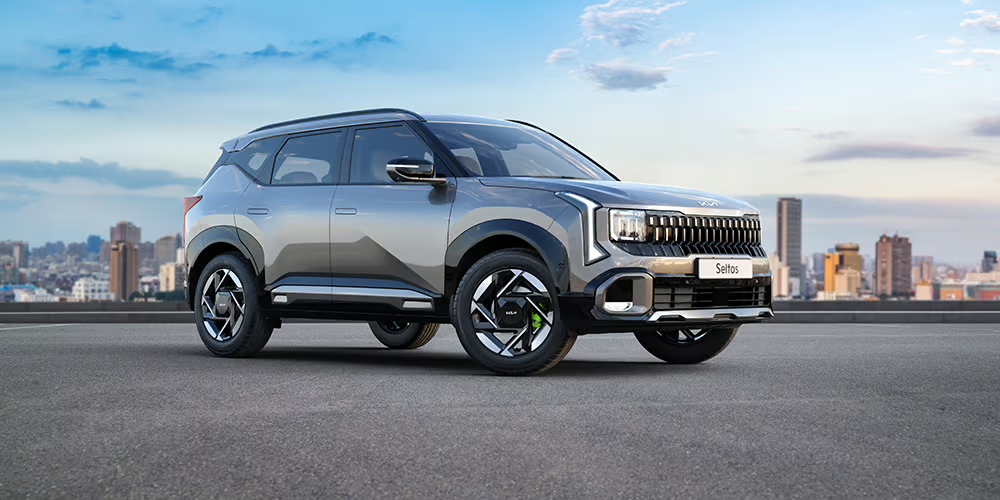
Kia has abandoned the cautious approach. The exterior design takes inspiration from the brand's global lineup, particularly models like the Telluride, delivering a boxy, muscular stance that radiates confidence. Built on the K3 platform making its India debut, the SUV measures 4,460 mm in length, 1,830 mm in width, with a wheelbase stretched to 2,690 mm—80 mm longer than before. It's now the longest vehicle in its segment.
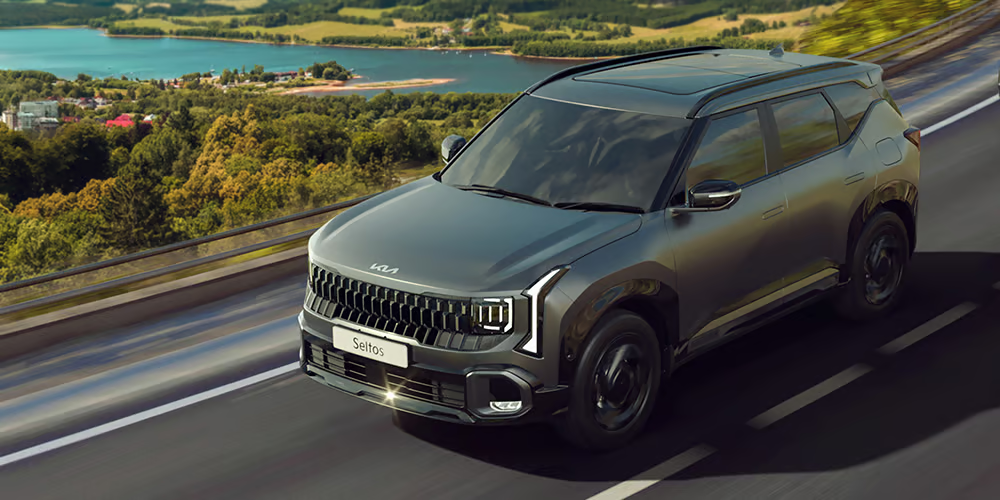
Up front, the Digital Tiger Face grille spans almost the entire width, finished in high-gloss black with dark gunmetal accents. Flanking this are the Ice Cube LED projection headlamps with dynamic welcome animation, while vertical LED DRLs create a striking signature. The lower bumper features body-colored accents around rectangular fog lamp housings, complemented by dark gunmetal skid plates.
In profile, the design stays clean and purposeful. Flush-type automatic door handles—a segment-first feature—sit alongside body cladding that runs across the wheel arches. The 18-inch sporty crystal-cut alloy wheels with neon brake calipers add a performance-oriented touch, especially on GT-Line variants. An integrated rear spoiler with a hidden wiper maintains the aerodynamic flow.
The rear gets connected Star Map LED tail lamps spanning the width, creating a futuristic light signature at night. The tailgate design has been refined with cleaner lines and a subtle character, moving away from the previous generation's busier aesthetic.
Kia offers 10 monotone color options, including new shades like Morning Haze, Magma Red, Frost Blue, and Ivory Silver Gloss. The X-Line variant gets an exclusive Xclusive Matte Graphite finish. Two dual-tone combinations are available: Glacier White Pearl with Aurora Black Pearl roof, and Magma Red with Aurora Black Pearl roof.
Interior Refinement Meets Technology
Step inside, and the transformation becomes even more apparent. The cabin borrows heavily from Kia's recent launches like the Syros and Carens Clavis, but with a more mature execution. The dashboard features the Trinity Panoramic Display Panel—a 30-inch curved glass setup integrating a 12.3-inch digital instrument cluster, a 12.3-inch touchscreen infotainment system, and a 5-inch climate control touchscreen.
The three-spoke steering wheel comes with dedicated drive mode and traction control buttons, wrapped in dual-tone black and cream-white leatherette. Soft-touch materials dominate the surfaces—dashboard, door trims, and seats all receive premium treatment. The GT-Line offers Smoky Black and White interiors, while the X-Line sports Smoky Black and Hunter Green with Satin Metal accents. Tech-Line variants get Brown and Grey or Black and Grey dual-tone themes.
Comfort features are extensive. The driver's seat offers 10-way power adjustment with memory function and lumbar support. Front seats get ventilation, the second row reclines and splits 60:40, and a panoramic sunroof opens up the cabin. Dual-zone climate control, 64-color ambient lighting, wireless charging, and a Bose premium sound system round out the experience. Boot space remains practical at 447 liters.
Physical buttons haven't been abandoned. Climate controls retain tactile switches despite the touchscreen, ensuring you're not fumbling through menus while driving. Tilt and telescopic steering adjustment starts from the HTK variant, while height adjustment for the driver is standard across the range.
Three Engines, Five Transmissions
Kia hasn't reinvented the powertrain strategy, instead refining what already works. Three familiar engines return, each paired with multiple transmission options to suit different driving styles.
The 1.5-liter naturally aspirated petrol produces 115 PS and 144 Nm, offering smooth city performance. It pairs with either a 6-speed manual or an IVT (Intelligent Variable Transmission), essentially Kia's CVT. This engine is standard on base variants and remains the choice for fuel-conscious buyers prioritizing efficiency over outright performance.
Performance enthusiasts will gravitate toward the 1.5-liter turbocharged petrol, generating 160 PS and 253 Nm. This unit comes with a 6-speed intelligent manual transmission (iMT) or a 7-speed dual-clutch automatic. The iMT eliminates the clutch pedal during gear changes while retaining manual control, while the DCT offers quicker shifts and a sportier driving character.
Diesel buyers get the 1.5-liter CRDi engine producing 116 PS and 250 Nm. It's available with a 6-speed manual or a 6-speed torque converter automatic. The diesel continues to be the preferred choice for highway cruising and long-distance driving, offering strong mid-range punch and superior fuel efficiency.
All variants remain front-wheel drive. While earlier rumors suggested a hybrid powertrain, Kia has confirmed this won't be part of the India lineup at launch. The focus remains on proven, reliable engines that Indian buyers trust.
new Kia Seltos 2026 Safety That Thinks Ahead
Safety receives a substantial upgrade with the new Kia Seltos 2026. Every variant gets a 24 Standard Safety Pack, including six airbags, ABS with EBD, Electronic Stability Control, Vehicle Stability Management, hill-start assist, downhill brake control, high-line tire pressure monitoring, rear parking sensors, a rearview camera, rollover sensor, three-point seatbelts with reminders, ISOFIX anchors, and auto door lock/unlock functions.
Higher variants introduce Level 2 ADAS with 21 autonomous safety features—one of the most comprehensive packages in the segment. Forward Collision Warning and Forward Collision-Avoidance Assist monitor traffic ahead, automatically braking if necessary. The system detects cars, pedestrians, cyclists, and even oncoming traffic at junctions.
Lane Keeping Assist and Lane Following Assist work together to keep the SUV centered in its lane, particularly useful on highways. Smart Cruise Control with Stop & Go maintains set speeds and distances, bringing the vehicle to a complete stop in traffic and resuming when traffic moves.
Blind Spot Collision Warning with Avoidance monitors vehicles in blind spots, while Rear Cross-Traffic Collision Warning alerts you to approaching vehicles when reversing. Safe Exit Warning prevents doors from opening if a vehicle is approaching from behind. A 360-degree surround camera with Blind View Monitor, combined with side parking sensors, makes maneuvering in tight spaces effortless.
The K3 platform uses high-strength steel extensively, improving torsional rigidity and crash protection. Reinforced crumple zones and a heavier bonnet supported by gas struts point to serious engineering efforts toward achieving a 5-star Bharat NCAP safety rating, following the Syros's recent success.
Variant Breakdown and Powertrain Allocation
Kia offers the Seltos in three distinct trims: Tech Line, GT Line, and X-Line. Within Tech Line, six variants are available: HTE, HTE (O), HTK, HTK (O), HTX, and HTX (A). GT Line comes in two variants: GTX and GTX (A). The X-Line Styling Pack is exclusively offered on GTX and GTX (A).
Base HTE variants get the 1.5-liter petrol with manual or the diesel with manual. HTE (O) and HTK add the turbo-petrol with iMT. HTX and HTX (A) offer five powertrain options—only the turbo-petrol iMT is missing. HTX (A) introduces the Trinity display and full ADAS suite.
GTX variants drop the naturally aspirated petrol entirely, offering only turbo-petrol with DCT and diesel with automatic. There's no diesel manual or turbo-petrol iMT in GT Line. GTX (A) brings the complete tech package including ADAS and the panoramic display.
X-Line adds distinctive styling with black high-gloss skid plates, dark gunmetal side accents, 18-inch black alloy wheels, and exclusive paint options. It's based on GT Line but with darker, more premium visual elements.
What You'll Pay and When You'll Get It
Kia hasn't revealed official pricing yet, but industry estimates place the starting price around ₹11.5 lakh for the base variant, with top-spec trims reaching approximately ₹21 lakh (ex-showroom). This represents a slight premium over the outgoing model, justified by the extensive upgrades in size, features, safety, and technology.
The official price announcement happens on January 2, 2026, during the launch event. Deliveries will start mid-January, meaning buyers who book now could have their Seltos by late January or early February. Given the festive season and typical dealer preparations, expect a phased rollout across dealerships nationwide.
Kia's pricing strategy will be critical. The segment has become intensely competitive with strong offerings from Hyundai Creta, Tata Sierra, Maruti Grand Vitara, Honda Elevate, MG Astor, and the German duo of Skoda Kushaq and Volkswagen Taigun. The Seltos needs to undercut or match these rivals while delivering more value—something Kia has historically excelled at.
Why This Generation Matters
The first-generation Seltos changed Kia's fortunes in India, becoming a bestseller within months of launch. It proved that Indian buyers value bold design, feature-rich cabins, and competitive pricing. This second generation arrives at a time when expectations have risen, competition has intensified, and safety standards have evolved.
By stretching dimensions, Kia addresses rear seat comfort—a critical factor for Indian families. The addition of comprehensive ADAS technology brings the Seltos in line with global safety norms while differentiating it from most rivals. The refreshed design language aligns with Kia's international portfolio, moving away from the India-specific approach of the previous model.
The retention of existing powertrains might seem conservative, but it's strategic. These engines have proven reliability, parts availability is established, and service networks are familiar with them. A hybrid powertrain could arrive later, but Kia is prioritizing a stable, well-executed launch over experimental technology.
The compact SUV segment accounts for a significant portion of India's SUV market, and the Seltos has consistently ranked among the top three sellers. This new generation aims to reclaim the number one position from the Hyundai Creta, which has been edging ahead in recent months. With increased search interest, strong booking momentum, and positive initial reactions, Kia's strategy appears sound.
The Verdict
The new Kia Seltos 2026 isn't playing it safe. It's taking calculated risks—bolder design that moves away from conventional SUV proportions, advanced safety technology that most rivals lack, and a premium interior that challenges vehicles priced higher. The platform upgrade, extensive use of high-strength steel, and comprehensive feature list demonstrate Kia's commitment to staying relevant in India's most competitive segment.
Whether it succeeds depends on pricing, real-world performance, and how quickly Kia can ramp up production to meet demand. Early indicators suggest strong buyer interest, with bookings opening to positive response. The mid-January delivery timeline means Kia is ready to capitalize on the post-festive buying season.
For buyers considering a compact SUV, the wait until January 2 for pricing details might be worth it. The combination of space, safety, technology, and Kia's proven reliability makes this a compelling package. The segment just got more interesting.
For those who want to compare it with other cars, check out our detailed car reviews and news section for more insights.
For more detail, you can visit the Kia website.